Nutraceuticals Manufacturers in Gujarat
Looking for nutraceuticals manufacturers in Gujarat? Explore products, certifications, pricing, and private label solutions with MGVS Lifesciences.
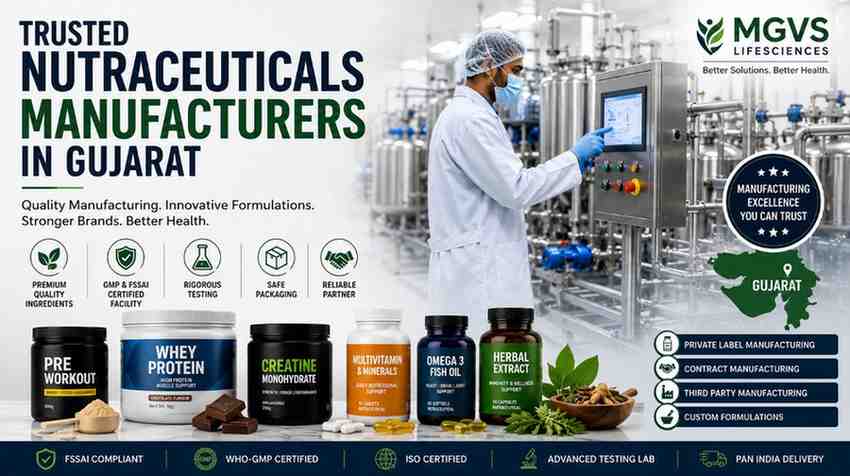
Why Are So Many Brands Looking for Nutraceuticals Manufacturers in Gujarat?
The Indian nutraceutical market has expanded rapidly over the last few years, and Gujarat has become one of the preferred destinations for businesses searching for reliable nutraceuticals manufacturers in Gujarat. Entrepreneurs, healthcare professionals, fitness brands, pharmacies, wellness startups, exporters, and even established pharmaceutical companies are exploring manufacturing partnerships in the state because of its well-developed industrial ecosystem and access to quality raw materials.
Gujarat has long been recognised as one of India's leading pharmaceutical and healthcare manufacturing hubs. That experience has naturally supported the growth of nutraceutical manufacturing as well. Many businesses find that sourcing products from experienced nutraceuticals manufacturers in Gujarat gives them access to modern production facilities, skilled technical teams, efficient logistics, and better supply chain management.
Still, choosing a manufacturer is rarely as simple as comparing prices. I've seen brands spend months building their logo, website, and marketing strategy, only to finalise a manufacturing partner after a single meeting. That decision often creates avoidable delays later, especially when product quality, documentation, or packaging expectations do not match.
Another reason businesses approach nutraceuticals manufacturers in Gujarat is the flexibility they offer. Whether someone wants to launch a protein powder, herbal capsules, gummies, tablets, effervescent products, or daily wellness supplements, manufacturers with diverse production capabilities can simplify the process under one roof.
At the same time, many brands also work with experienced manufacturers outside Gujarat when they prioritise formulation expertise, dedicated technical support, and consistent quality over location alone. MGVS Lifesciences works with businesses across India by providing private label manufacturing, contract manufacturing, custom formulations, and third party manufacturing for a wide range of nutraceutical products, making geographical distance far less important than manufacturing capability.
The focus should always remain on finding a manufacturing partner that understands compliance, quality testing, scalability, and long term business growth instead of simply selecting the nearest facility.
What Products Can Nutraceuticals Manufacturers in Gujarat Develop and Manufacture?
One of the biggest advantages of working with established nutraceuticals manufacturers in Gujarat is the wide variety of products they can manufacture for different customer segments. Consumer demand has shifted significantly from general health supplements to targeted nutritional solutions designed for specific lifestyles and health goals.
Depending on their manufacturing capabilities, businesses can develop products such as:
Whey Protein
Plant Protein
Mass Gainers
Pre Workout Supplements
BCAA and EAA Formulations
Creatine Supplements
Protein Blends
Collagen Supplements
Multivitamin Tablets
Immunity Boosters
Omega Fatty Acid Supplements
Calcium and Vitamin D Products
Ayurvedic Nutraceuticals
Herbal Capsules
Gummies
Effervescent Tablets
Oral Liquids
Syrups
Softgel Capsules
Hard Gelatin Capsules
Tablets
Sachets
Powder Blends
Sports nutrition continues to remain one of the fastest-growing categories. Many gym owners, fitness influencers, and nutrition coaches are now launching their own supplement brands instead of promoting someone else's products.
A common example is a fitness chain that starts with branded whey protein and later expands into creatine, pre workout supplements, electrolytes, and recovery products after building customer trust. Working with experienced nutraceuticals manufacturers in Gujarat or trusted partners like MGVS Lifesciences makes this expansion much easier because product development, flavour selection, packaging, and compliance can all be managed together.
Businesses targeting doctors, hospitals, or wellness clinics often choose clinically positioned nutritional supplements with carefully balanced formulations. Others focus on herbal wellness products that combine traditional Ayurvedic ingredients with modern manufacturing standards.
Product innovation has also become increasingly important. Consumers now expect clean labels, sugar free options, vegan formulations, higher protein concentrations, better taste, and convenient packaging formats. Manufacturers capable of custom formulation development are better positioned to support brands entering these competitive segments.
Private Label, Contract Manufacturing, and Third Party Manufacturing Explained
Many first-time entrepreneurs use these terms interchangeably, but they are not exactly the same. Understanding the difference helps businesses choose the right manufacturing model for their growth plans.
Private Label Manufacturing
Private label manufacturing allows businesses to sell products under their own brand name while the manufacturer handles production. The formulation may already exist, or it can be customised based on business requirements.
This model works well for startups, gyms, pharmacies, wellness stores, healthcare professionals, and distributors looking to launch products quickly without investing in their own factory.
Contract Manufacturing
Contract manufacturing usually involves a deeper collaboration. Businesses may provide their own formulations, ingredient specifications, packaging requirements, or quality parameters while the manufacturer produces according to agreed standards.
This approach is often chosen by established supplement companies that already have defined products but require scalable production capacity.
Third Party Manufacturing
Third party manufacturing is one of the most popular business models in India's nutraceutical industry. Here, the manufacturing company produces products on behalf of another business, allowing the brand owner to focus on marketing, sales, and distribution.
Many successful supplement companies in India operate without owning manufacturing facilities. Instead, they build their business around branding, customer service, and market expansion while experienced manufacturing partners manage production.
MGVS Lifesciences supports businesses through private label manufacturing, contract manufacturing, and third party manufacturing depending on their specific requirements. This flexibility allows startups as well as established brands to choose a manufacturing model that matches their budget, production volume, and long term objectives.
One practical lesson many businesses learn later is that choosing the cheapest manufacturing option often becomes more expensive if quality issues lead to product returns, customer complaints, or regulatory challenges.
How to Evaluate Quality Standards, Certifications, and Regulatory Compliance Before Choosing a Manufacturer
Before finalising any of the available nutraceuticals manufacturers in Gujarat, businesses should spend time evaluating quality systems instead of focusing only on quotations.
A lower manufacturing cost may appear attractive initially, but inadequate quality control can affect product consistency, customer trust, and future brand growth.
Some of the most important aspects to verify include:
Evaluation Area
Why It Matters
Ensures products meet Indian food safety regulations.
GMP Certification
Demonstrates adherence to Good Manufacturing Practices.
ISO Certification
Reflects structured quality management systems.
Raw Material Testing
Confirms ingredient identity, purity, and safety before production.
In Process Quality Checks
Helps maintain batch consistency during manufacturing.
Finished Product Testing
Verifies nutritional values, microbial safety, and product quality before dispatch.
Label Compliance
Reduces the risk of regulatory issues caused by incorrect claims or declarations.
Documentation Support
Important for audits, distributors, exports, and future regulatory requirements.
It is also worth asking how manufacturers handle vendor qualification, ingredient traceability, batch records, complaint management, and product recalls. These systems usually indicate how mature the manufacturing operation really is.
I might be wrong here, but this does not apply to every manufacturer. Some smaller facilities maintain excellent quality standards despite having limited production capacity, while larger factories may still struggle with consistency if quality systems are not properly implemented.
Businesses should also ask whether stability studies, shelf life validation, flavour trials, packaging compatibility testing, and moisture control are part of the development process. These details rarely appear in quotations, yet they have a significant impact on product performance once it reaches the market.
Manufacturing partnerships often last for years. Spending extra time evaluating quality before placing the first order usually saves both money and reputation later.
What Happens from Product Idea to Commercial Production? Understanding the Complete Manufacturing Process
Many businesses approach nutraceuticals manufacturers in Gujarat with a product idea but very little understanding of what happens before the finished bottles or pouches are ready for sale. A supplement does not move directly from concept to production. There are multiple stages involved, and every stage influences the quality, safety, appearance, and market readiness of the final product.
The process usually begins with a discussion about the target audience. A sports nutrition startup may require a high-protein whey supplement for gym enthusiasts, while a healthcare brand may be planning a doctor-recommended multivitamin or an immunity support formula. The intended customer determines ingredient selection, dosage, flavour profile, packaging, and even label claims.
Once the concept is clear, formulation development starts. Experienced technical teams evaluate ingredient compatibility, nutritional objectives, taste, solubility, stability, and manufacturing feasibility. If the product is being customised, several revisions may be needed before the formulation meets the desired expectations.
I still remember seeing cartons stacked in a warehouse during peak summer. That small moment reminded me how important packaging and storage conditions are, especially for moisture-sensitive powders and herbal formulations.
After the formulation is approved, raw materials are sourced from qualified suppliers. Reputed manufacturers verify incoming ingredients through quality checks before they are released for production. This helps ensure consistency from one batch to another and reduces the chances of contamination or variation.
The manufacturing stage itself follows carefully controlled procedures. Depending on the product, this may include blending, granulation, encapsulation, tableting, filling, or liquid processing. During production, quality teams monitor critical parameters to maintain batch uniformity.
Once manufacturing is complete, products undergo finished goods testing. Nutritional values, microbial safety, physical characteristics, and packaging integrity are verified before dispatch. Documentation is prepared to support compliance and traceability.
Packaging comes next. Whether the product is packed in jars, stand-up pouches, sachets, bottles, or blister packs, proper sealing and labelling are essential to maintain shelf life and consumer confidence.
Many entrepreneurs are surprised to learn that label approval can sometimes take longer than expected. Incorrect ingredient declarations, missing statutory information, or non-compliant health claims often delay commercial launches. Resolving these issues before production begins saves valuable time.
MGVS Lifesciences follows a structured manufacturing approach that supports businesses from formulation discussions to commercial production. Whether the requirement is for Protein Powder Manufacturing, Capsule Manufacturing, Tablet Manufacturing, Liquid Supplement Manufacturing, or complete Third Party Manufacturing, the objective is to help brands launch products with consistency and confidence.
Sometimes the process feels longer than expected.
Factors That Influence Cost, MOQ, Packaging, and Manufacturing Timelines
One of the first questions businesses ask nutraceuticals manufacturers in Gujarat is about pricing. While manufacturers can provide quotations, the final cost depends on several technical and commercial factors rather than a single price per kilogram.
The choice of ingredients has a major impact. Premium imported raw materials, branded ingredients, specialised botanical extracts, patented compounds, or higher protein concentrations naturally increase manufacturing costs compared to standard formulations.
Packaging also plays a significant role. A simple HDPE jar with a standard label is generally more economical than premium matte-finish containers, shrink sleeves, custom scoops, induction sealing, printed cartons, or luxury packaging designed for modern retail shelves.
Flavour selection is another consideration. Developing chocolate, café mocha, mango, cookies and cream, or fruit-based flavours often requires multiple sampling rounds before the desired taste is achieved. Better flavours may slightly increase development costs, but they often improve customer retention.
Minimum Order Quantity, commonly known as MOQ, is another factor that businesses should understand early. Lower MOQs can help startups reduce their initial investment, but they may also increase manufacturing costs because production setup expenses are distributed across fewer units.
Factor
Impact on Manufacturing
Raw Material Quality
Premium ingredients increase cost but improve product value.
Batch Size
Larger batches generally reduce per-unit manufacturing cost.
MOQ
Lower MOQ offers flexibility but may increase unit pricing.
Packaging Type
Premium packaging increases overall investment.
Custom Formulation
Additional development work can extend timelines.
Testing Requirements
Advanced testing adds confidence and supports compliance.
Label Design and Printing
Custom packaging requires additional planning and approvals.
Earlier, we discussed the importance of MOQ while selecting a manufacturing partner. That remains true for many startups because investment planning matters.
Having said that, there are situations where quality becomes far more important than MOQ. Choosing a manufacturer simply because they accept very small orders may not be worthwhile if product consistency suffers or customers lose confidence after the first purchase.
Manufacturing timelines also vary depending on formulation complexity, raw material availability, packaging procurement, flavour approvals, artwork finalisation, and production scheduling. Businesses planning seasonal product launches should begin discussions well in advance rather than waiting until demand peaks.
Sometimes clients negotiate ₹20 per kg while ignoring product quality, and that decision becomes expensive later.
Custom Formulations, Flavour Development, and Product Innovation for Growing Supplement Brands
The nutraceutical industry has become increasingly competitive, and selling the same formulation as dozens of other brands is rarely a sustainable strategy. This is one reason many businesses working with nutraceuticals manufacturers in Gujarat now prefer customised product development instead of selecting only standard formulations.
Custom formulation begins with understanding the purpose of the product. A sports nutrition company may want a faster-mixing whey protein with digestive enzymes, while a wellness brand may be looking for herbal ingredients that support daily vitality. Healthcare professionals often require formulations designed around specific nutritional requirements rather than mass-market trends.
Flavour development is equally important. Consumers expect supplements to taste good without compromising nutritional quality. Manufacturers typically create multiple flavour samples before commercial production, allowing clients to compare sweetness, aroma, texture, and aftertaste.
One challenge that many first-time brands underestimate is flavour stability. A product that tastes excellent immediately after production should continue to maintain its taste throughout its shelf life. Achieving this balance requires careful ingredient selection and manufacturing expertise.
Innovation also extends beyond the formulation itself. Businesses increasingly request sugar-free products, vegan options, plant-based proteins, clean-label ingredients, natural sweeteners, functional blends, and convenient single-serve packaging.
MGVS Lifesciences supports brands through Custom Nutraceutical Formulation, Sports Nutrition Manufacturing, Whey Protein Manufacturing, Mass Gainer Manufacturing, Pre Workout Manufacturing, Creatine Manufacturing, and complete private label development. This allows businesses to create products that reflect their own brand identity rather than competing only on price.
One interesting trend is that doctors, nutritionists, and fitness coaches are launching their own branded supplements. Their customers often trust personalised recommendations more than generic retail products, creating opportunities for smaller but well-positioned supplement brands.
Of course, not every new formulation becomes a bestseller. Some products require adjustments after receiving customer feedback, while others perform well from the beginning because sufficient time was invested in research and sampling before launch.
Why Businesses Across India Choose MGVS Lifesciences as Their Manufacturing Partner
Although many businesses begin their search with nutraceuticals manufacturers in Gujarat, the final decision is usually based on manufacturing capability, quality systems, product range, and long-term support rather than geography alone.
MGVS Lifesciences works with entrepreneurs, supplement startups, distributors, exporters, healthcare professionals, wellness companies, and established brands across India by offering manufacturing solutions that are designed around business requirements instead of standard production alone.
The company supports a broad portfolio that includes Private Label Supplement Manufacturing, Contract Manufacturing, Third Party Manufacturing, Protein Powder Manufacturing, Capsule Manufacturing, Tablet Manufacturing, Liquid Supplement Manufacturing, and customised nutraceutical formulations. This enables businesses to expand into multiple product categories while working with a single manufacturing partner.
Quality remains a central focus throughout the process. From sourcing approved raw materials and maintaining controlled manufacturing practices to conducting quality testing and supporting regulatory documentation, every stage contributes to producing supplements that businesses can confidently introduce to the market.
Clients also appreciate the guidance they receive beyond manufacturing. Discussions often include packaging recommendations, formulation improvements, label compliance, production planning, and practical suggestions that come from working with a wide variety of supplement brands.
One thing that becomes clear after speaking with experienced manufacturers is that launching a supplement brand is not only about making products. It is about building a business that customers trust year after year.
For entrepreneurs evaluating nutraceuticals manufacturers in Gujarat, it is worth looking beyond the quotation sheet. Ask how problems are handled. Ask how formulations are developed. Ask what happens if a batch needs modification, if packaging materials arrive late, or if regulatory requirements change. The answers to those questions often tell you much more about a manufacturing partner than the price ever will.
Common Mistakes Brands Make While Choosing Nutraceuticals Manufacturers in Gujarat
Searching for nutraceuticals manufacturers in Gujarat is relatively easy. Choosing the right manufacturing partner is where most businesses struggle.
Over the years, many supplement brands have entered the market with excellent branding, attractive packaging, and strong marketing campaigns, only to face avoidable manufacturing problems a few months later. In many cases, these issues could have been prevented with better planning during the manufacturer selection stage.
One of the biggest mistakes is selecting a manufacturer based only on price. Lower quotations may seem attractive, but they often do not tell the complete story. Differences in raw material quality, testing protocols, packaging standards, and technical support can significantly affect the final product.
Another common mistake is not asking enough questions about certifications and compliance. Every business should verify FSSAI compliance, GMP practices, quality testing procedures, and documentation support before placing an order. These factors become even more important if the products are intended for exports or institutional sales.
Many first-time entrepreneurs also underestimate the importance of product sampling. Approving commercial production without evaluating flavour, texture, appearance, mixability, or packaging samples can lead to disappointing results after launch.
Packaging is another area that deserves more attention than it usually receives. Businesses often spend considerable time choosing ingredients but finalise packaging at the last moment. Poor-quality containers, weak sealing, or incorrect label information can damage both the product and the brand's reputation.
Some brands assume that every manufacturer develops customised formulations. In reality, many manufacturers primarily work with standard formulations, while others have dedicated research and development teams capable of creating unique products. Clarifying this early helps avoid misunderstandings later.
Production timelines are also frequently misunderstood. Businesses announce product launch dates before confirming raw material availability, packaging procurement, and manufacturing schedules. Even a small delay in printed labels or imported ingredients can postpone commercial production.
Another issue is ignoring scalability. A manufacturer may comfortably produce an initial batch, but can they support increasing demand six months later? This question becomes important once the brand starts growing.
MGVS Lifesciences works with businesses at different stages of their journey, from first-time entrepreneurs to established supplement companies. The emphasis is not only on manufacturing but also on helping clients understand formulation choices, compliance requirements, packaging decisions, and production planning so that costly mistakes can be avoided before they occur.
Choosing among the available nutraceuticals manufacturers in Gujarat should never be rushed. A manufacturing partnership often lasts much longer than a marketing campaign, and the right decision today can support a brand for years.
Frequently Asked Questions About Nutraceuticals Manufacturers in Gujarat
How do I choose the right nutraceuticals manufacturers in Gujarat?
Start by evaluating manufacturing experience, product range, quality certifications, FSSAI compliance, GMP practices, testing facilities, formulation capabilities, packaging support, and production capacity. Price is important, but it should not be the only deciding factor.
Can nutraceuticals manufacturers in Gujarat develop custom supplement formulations?
Yes. Many experienced manufacturers provide custom formulation services for protein powders, capsules, tablets, gummies, herbal supplements, sports nutrition products, and wellness formulations. Always confirm whether research and development support is available before starting the project.
What is the difference between private label and third party manufacturing?
Private label manufacturing allows you to market products under your own brand name, often using existing or customised formulations. Third party manufacturing focuses on producing products on behalf of your company while you manage branding, sales, and distribution.
What certifications should I verify before selecting a manufacturer?
Look for FSSAI compliance, GMP certification, ISO certification, quality control systems, batch testing procedures, and proper manufacturing documentation. These demonstrate that the manufacturer follows recognised quality standards.
What products can nutraceuticals manufacturers in Gujarat manufacture?
Most established manufacturers produce protein powders, whey protein, mass gainers, creatine, pre workout supplements, herbal products, multivitamins, tablets, capsules, gummies, syrups, liquid supplements, sachets, and other dietary supplements.
How long does it take to launch a private label nutraceutical product?
The timeline depends on formulation development, raw material procurement, packaging approval, label compliance, production scheduling, and testing requirements. Standard products may be ready sooner, while customised formulations generally require additional development time.
Is a lower MOQ always better for startups?
Not necessarily. Lower MOQs reduce initial investment, but they may increase manufacturing costs per unit. In many situations, choosing consistent quality and a reliable manufacturing partner provides better long-term value than focusing only on the smallest MOQ.
Does MGVS Lifesciences work only with businesses in Gujarat?
No. MGVS Lifesciences partners with entrepreneurs, healthcare professionals, distributors, exporters, gym owners, wellness brands, and supplement companies across India. The company offers Private Label Manufacturing, Contract Manufacturing, Third Party Manufacturing, and Custom Nutraceutical Formulation services for businesses looking to build and grow their own supplement brands.