Nutraceutical Contract Manufacturing in India
Nutraceutical contract manufacturing works, how to choose the right partner, and why MGVS Lifesciences is a trusted manufacturer in India.
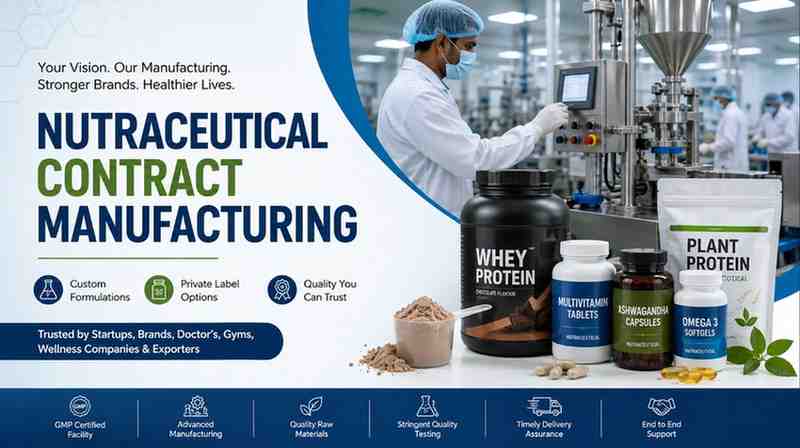

Why More Supplement Brands Are Choosing Nutraceutical Contract Manufacturing Instead of Building Their Own Factory
Launching a supplement brand has become far more accessible than it was a decade ago, but manufacturing remains one of the biggest hurdles. Many entrepreneurs begin with a strong product idea, a clear target audience, and a marketing plan, only to realize that setting up a manufacturing facility is a completely different business. Purchasing machinery, building a GMP compliant unit, hiring trained staff, arranging quality testing equipment, and obtaining regulatory approvals require significant investment and time.
This is exactly why nutraceutical contract manufacturing has become the preferred choice for startups, healthcare professionals, gym owners, wellness companies, exporters, and established brands looking to expand their product range.
Instead of investing heavily in infrastructure, businesses can work with an experienced manufacturer that already has certified production facilities, trained technical teams, and established quality systems. This allows them to focus on branding, marketing, distribution, and customer acquisition while manufacturing is handled by specialists.
A good example is a gym owner planning to launch a whey protein brand. The owner may understand fitness and customer preferences exceptionally well but may have little experience in sourcing protein concentrates, developing flavours, conducting microbiological testing, or ensuring FSSAI compliant labeling. Partnering with a trusted manufacturer bridges that gap without compromising product quality.
Another common situation involves doctors and nutritionists who want to introduce their own line of supplements. They usually have strong clinical knowledge but prefer not to manage factory operations. Nutraceutical contract manufacturing enables them to launch scientifically formulated products under their own brand while relying on experienced manufacturing teams.
Many businesses also underestimate the time required to establish a manufacturing plant. Obtaining approvals, validating production equipment, setting up laboratories, training staff, and creating quality documentation can take many months. During this period, market opportunities often move quickly. Working with an established manufacturer allows brands to enter the market much faster.
I still remember seeing cartons stacked in a warehouse during peak summer.
Storage conditions may seem like a small operational detail, but they directly affect product quality. Experienced manufacturers understand warehouse management, temperature control, inventory rotation, and transportation planning, which many first time brands overlook.
Although low manufacturing cost often attracts new businesses, it should never be the only deciding factor. Sometimes clients negotiate a few rupees per kilogram while ignoring raw material quality, stability testing, or packaging durability. Those savings disappear quickly if customer complaints begin after launch.
This is where companies like MGVS Lifesciences add value. Rather than simply producing supplements, they work with brands through different stages of product development, ingredient selection, manufacturing, quality assurance, packaging, and regulatory compliance. The relationship becomes more of a manufacturing partnership than a supplier arrangement.
Building your own factory may eventually make sense for very large brands with consistent production volumes. However, for most startups and growing companies, nutraceutical contract manufacturing offers flexibility, lower financial risk, faster market entry, and access to experienced technical expertise that would otherwise take years to build.
What Really Happens During Nutraceutical Contract Manufacturing From Formula Approval to Final Dispatch
Many people imagine manufacturing as simply mixing ingredients and filling containers. In reality, nutraceutical contract manufacturing involves a series of carefully managed steps where every stage influences the final product's quality, safety, and consistency.
Everything usually begins with understanding the client's vision. Some brands already have a finalized formulation, while others only know the type of product they want to launch. It could be a whey protein, multivitamin tablet, herbal capsule, collagen powder, electrolyte drink, or sports nutrition supplement.
If formulation development is required, research and development teams begin evaluating ingredient compatibility, dosage, taste, stability, and manufacturing feasibility. Custom formulation often takes several rounds of refinement before both the client and technical team are satisfied.
Flavour development is another stage that surprises many new brands. Chocolate may sound simple until multiple tasting sessions reveal differences in sweetness, aftertaste, mixability, and aroma. A slight adjustment in flavouring agents can completely change customer acceptance.
Once the formulation is approved, raw material procurement begins. Reliable manufacturers source ingredients from qualified vendors and verify accompanying quality documents before accepting deliveries. Incoming materials are inspected and tested according to established quality procedures before entering production.
Production planning follows next. Manufacturing schedules are prepared based on batch size, equipment availability, packaging materials, and delivery commitments.
During production, every ingredient is weighed accurately according to approved batch manufacturing records. Mixing, blending, granulation, encapsulation, compression, or filling operations are performed under controlled conditions depending on the product category.
Quality control teams continuously monitor production. Samples are collected throughout the process to ensure consistency in appearance, weight variation, moisture levels, microbiological safety, and other required quality parameters.
Packaging is much more technical than many people expect. Container selection depends on moisture protection, shelf life, transportation requirements, and consumer convenience. Sometimes businesses choose attractive packaging first and only later discover that it does not adequately protect the product. Correct packaging decisions prevent many future problems.
Label review is equally important. FSSAI regulations require accurate declarations regarding ingredients, nutritional values, allergen information, batch numbers, manufacturing dates, expiry dates, and other mandatory details. Incorrect labels can delay product launches even after manufacturing has been completed.
I might be wrong here, but this does not apply to every manufacturer. Some manufacturing facilities offer extensive regulatory guidance, while others expect clients to manage much of the documentation independently. Understanding these responsibilities before production begins helps avoid unnecessary delays.
After successful quality testing, finished products are packed into shipping cartons, documented, and prepared for dispatch. Logistics planning considers transportation conditions, destination requirements, and delivery timelines.
Export orders involve additional documentation, including certificates, product specifications, shipping paperwork, and country specific compliance requirements. Manufacturers experienced in exports can simplify this process considerably for growing brands.
By the time products leave the manufacturing facility, hundreds of individual quality checks, documentation steps, and operational decisions have already taken place. Customers only see the finished bottle on a store shelf, but the journey starts long before that.
How to Choose the Right Nutraceutical Contract Manufacturing Partner Without Costly Mistakes
Selecting a manufacturing partner is one of the most important decisions a supplement brand will make. The quality of your products, customer satisfaction, regulatory compliance, and long term reputation all depend heavily on this choice.
One of the first things to evaluate is manufacturing capability. Does the company produce only one category of supplements, or can it manufacture powders, capsules, tablets, gummies, liquids, and sports nutrition products under one roof? A broader manufacturing capability often allows your product portfolio to expand without changing partners later.
Certifications matter because they reflect established quality systems. Verify FSSAI registration, GMP compliance, ISO certifications, and any additional certifications relevant to your target market. These demonstrate that manufacturing follows recognized quality standards.
Experience also deserves attention. A manufacturer that has worked with sports nutrition startups, Ayurvedic wellness brands, pediatric supplements, and doctor branded formulations is likely to understand different product requirements better than one with limited exposure.
Request information about raw material sourcing. Reliable manufacturers maintain approved supplier networks and conduct quality verification before production begins. Cheap ingredients may reduce manufacturing costs, but they can also affect product performance and customer trust.
Minimum Order Quantity often becomes a major discussion point. Startups usually prefer smaller production runs to reduce inventory risk. Earlier I mentioned that MOQ is important, and it certainly influences budgeting and warehouse planning. Yet after seeing several product launches over the years, I have also learned that quality, technical support, and manufacturing consistency often matter far more than securing the lowest MOQ available.
Lead time is another area where expectations should be realistic. Custom formulations, flavour approvals, packaging procurement, and regulatory reviews all require time. Businesses that plan manufacturing schedules well in advance generally avoid unnecessary launch delays.
Ask about quality testing procedures. Every production batch should undergo appropriate physical, chemical, and microbiological testing before release. Transparent manufacturers willingly explain their quality control process and documentation practices.
Communication is something many businesses ignore during manufacturer selection. Regular updates, quick responses, technical guidance, and problem solving become extremely valuable once production begins. Brands often spend months perfecting marketing but choose the wrong manufacturing partner in a single meeting.
One sentence that still feels true even if it sounds a little awkward is this. Manufacturing becomes much easier when both sides understand each other's expectations before the first batch starts.
Companies like MGVS Lifesciences work with businesses at different stages of growth, from first time entrepreneurs to established supplement companies expanding into new categories. Along with nutraceutical contract manufacturing, capabilities such as private label manufacturing, custom nutraceutical formulation, protein powder manufacturing, whey protein manufacturing, capsule manufacturing, tablet manufacturing, sports nutrition manufacturing, and third party manufacturing help brands scale without changing manufacturing partners as their business grows.
Before signing any agreement, visit the manufacturing facility if possible. Observe cleanliness, production flow, warehouse management, documentation practices, and quality systems firsthand. Speaking directly with technical and quality teams often provides more confidence than any sales presentation ever can.
Because at the end of the day, choosing a manufacturer is not just about producing supplements. It is about selecting a partner that will represent your brand every time a customer opens one of your products.
Custom Formulations, Private Label Options, and Product Categories You Can Manufacture
Every supplement brand has a different story. Some entrepreneurs want to introduce an innovative formulation that fills a market gap, while others prefer launching proven products quickly under their own brand name. That is why nutraceutical contract manufacturing today is much more flexible than many people assume.
One of the biggest advantages of working with an experienced manufacturer is access to multiple manufacturing models instead of a single production approach.
For businesses looking to launch quickly, private label manufacturing is often the fastest option. In this model, manufacturers already have tested formulations that can be packed under your own brand after necessary approvals and label customization. This works particularly well for startups entering the sports nutrition, wellness, immunity, or daily nutrition segments.
On the other hand, many established brands prefer custom formulation. Here, the product is developed specifically for the brand's requirements. This may involve changing ingredient combinations, improving bioavailability, adding clinically studied ingredients, reducing sugar content, introducing vegan alternatives, or creating unique flavour profiles.
I have seen brands spend weeks discussing a single chocolate flavour. At first it sounds excessive, but after comparing different samples, you realise that even small flavour changes can influence repeat purchases.
Custom formulation also gives brands greater control over product positioning. A doctor may want a therapeutic nutrition supplement, while a gym chain may require a high protein performance formula. Both fall under nutraceutical contract manufacturing, yet their formulation objectives are completely different.
Another important decision involves selecting the right dosage form. Different consumers have different preferences, and every product category has its own manufacturing requirements.
Product Category
Common Applications
Protein Powders
Sports nutrition, meal replacement, muscle recovery
Whey Protein
Fitness enthusiasts, athletes, gym brands
Mass Gainers
Weight gain and muscle building
Pre Workout Supplements
Energy and performance
Creatine Supplements
Strength and endurance
Capsules
Herbal, vitamins, minerals, probiotics
Tablets
Multivitamins, calcium, immunity products
Gummies
Kids and adult wellness products
Liquid Supplements
Syrups, immunity tonics, herbal blends
Effervescent Tablets
Electrolytes and vitamin supplements
Apart from formulation, packaging plays a major role in how customers perceive the brand. Manufacturers usually offer jars, stand up pouches, sachets, blister packs, HDPE bottles, PET containers, stick packs, and bulk packaging depending on product type.
Label design support is another area where experienced manufacturers make a noticeable difference. A professionally designed label must not only look attractive but also comply with FSSAI requirements regarding nutritional information, ingredient declarations, allergen statements, serving size, storage instructions, batch details, and mandatory declarations.
At MGVS Lifesciences, brands can choose from a broad manufacturing portfolio that includes Protein Powder Manufacturing, Whey Protein Manufacturing, Mass Gainer Manufacturing, Pre Workout Manufacturing, Creatine Manufacturing, Capsule Manufacturing, Tablet Manufacturing, Liquid Supplement Manufacturing, Sports Nutrition Manufacturing, Private Label Supplement Manufacturing, and Custom Nutraceutical Formulation services. This allows businesses to expand their product range while working with a single manufacturing partner instead of coordinating with multiple suppliers.
The flexibility offered by modern nutraceutical contract manufacturing allows brands to grow gradually. A startup may begin with two products today and add ten more over the next few years without disrupting its manufacturing process.
Quality Standards, Certifications, and Regulatory Compliance Every Brand Should Verify
Quality is one of those words everyone uses, but very few people actually investigate before choosing a manufacturer.
A clean reception area and modern machinery create a good first impression, yet genuine quality begins long before production starts and continues long after products leave the factory.
During nutraceutical contract manufacturing, quality starts with supplier qualification. Reliable manufacturers source raw materials only from approved vendors who consistently meet predefined quality standards. Every incoming ingredient is inspected and tested before being accepted for production.
Protein ingredients, herbal extracts, vitamins, minerals, amino acids, botanical powders, sweeteners, and flavouring agents all undergo different quality checks depending on their intended application.
Manufacturing itself follows documented Standard Operating Procedures to ensure every production batch remains consistent. Batch Manufacturing Records help maintain traceability throughout the production cycle.
Some of the important certifications and compliance requirements brands should verify include:
Certification or Compliance
Why It Matters
FSSAI License
Mandatory for food and nutraceutical manufacturing in India
GMP Certification
Demonstrates Good Manufacturing Practices
ISO Certification
Supports consistent quality management systems
HACCP
Focuses on food safety risk management
COA Documentation
Confirms laboratory test results for ingredients and finished products
Product Testing
Verifies quality, purity, and microbiological safety
Many entrepreneurs focus only on finished product testing. In reality, quality checks happen throughout production. Raw material testing, in process inspection, finished goods analysis, packaging verification, and warehouse monitoring all contribute to product consistency.
One common mistake involves assuming imported ingredients are automatically superior. That simply is not true. Several Indian ingredient manufacturers now produce exceptionally high quality raw materials that meet international standards. Selection should always depend on supplier reliability and testing results rather than country of origin alone.
Regulatory compliance extends beyond manufacturing.
Labels must contain mandatory declarations.
Health claims should remain within permissible limits.
Ingredient lists must be accurate.
Nutrition information should match laboratory analysis.
Even a small labeling mistake can delay product approvals or create compliance issues after launch.
Export focused brands should also verify whether the manufacturer has experience preparing export documentation. Different countries may require additional product documentation, testing reports, certificates, or packaging specifications.
Manufacturers like MGVS Lifesciences integrate quality assurance, regulatory compliance, laboratory testing, documentation, and production controls throughout the nutraceutical contract manufacturing process, giving brands greater confidence before products reach the market.
Because once customers trust a supplement brand, maintaining that trust becomes just as important as winning it in the first place.
Understanding MOQ, Manufacturing Costs, Lead Time, and Packaging Decisions Before Production Begins
Before placing the first production order, every business eventually asks the same four questions.
What is the MOQ?
How much will manufacturing cost?
When will production be completed?
Which packaging should we choose?
These questions seem simple, yet each one influences profitability, inventory planning, and market success.
Minimum Order Quantity, commonly called MOQ, depends on several factors rather than one fixed number. Product category, raw material availability, packaging components, formulation complexity, and production efficiency all influence minimum batch sizes.
A standard multivitamin tablet may have a different MOQ than a custom flavoured whey protein or collagen supplement.
Lower MOQs help startups reduce inventory investment, but extremely small production runs sometimes increase manufacturing costs because setup expenses remain almost the same regardless of batch size.
Manufacturing cost itself is influenced by multiple variables.
Raw material quality.
Imported versus domestic ingredients.
Dosage strength.
Packaging materials.
Container size.
Flavor systems.
Testing requirements.
Order volume.
Transportation.
Many first time brands compare quotations without understanding what has actually been included. One manufacturer may include premium packaging, while another quotes only basic manufacturing charges. Comparing quotations line by line gives a much clearer picture.
Lead time is another area where unrealistic expectations create unnecessary frustration.
Custom formulation takes time.
Packaging procurement takes time.
Label approval takes time.
Quality testing takes time.
Brands planning product launches around festivals, sporting events, or seasonal demand should begin manufacturing well in advance instead of waiting until the last minute.
Packaging deserves more attention than it usually receives.
Consumers judge products within seconds.
The container should protect product quality while also creating a positive first impression.
Protein powders may require moisture resistant jars.
Capsules often need induction sealing.
Travel packs may require sachets.
Premium wellness brands frequently invest in attractive secondary packaging to improve shelf appeal.
Sometimes businesses spend hours comparing container colours while forgetting to verify storage recommendations. That conversation usually changes after the first summer shipment reaches a warehouse.
A reliable nutraceutical contract manufacturing partner guides clients through these commercial decisions instead of simply accepting purchase orders. Better planning before production almost always reduces unexpected costs later.
Common Challenges Brands Face During Nutraceutical Contract Manufacturing and How to Avoid Them
Every successful supplement brand has faced at least a few unexpected challenges before launch.
Sometimes it is delayed packaging.
Sometimes raw material availability changes.
Sometimes flavour approval takes much longer than expected.
And occasionally, products are ready but labels still need regulatory corrections.
These situations are not unusual during nutraceutical contract manufacturing, especially for first time entrepreneurs.
One common issue is changing product specifications after production planning has already started. Even a small ingredient change may require reformulation, revised documentation, fresh quotations, and additional testing.
Another challenge involves unrealistic launch timelines.
Many brands expect product development, approvals, production, packaging, testing, and dispatch to finish within a few weeks. In practice, quality manufacturing requires proper planning.
MOQ confusion also creates problems.
Businesses often request very small quantities for highly customized products. While manufacturers try to remain flexible, production efficiency and procurement requirements still need to be balanced.
Flavour approval is another underestimated stage.
One sample becomes three.
Three become six.
Then everyone suddenly prefers the second sample after originally rejecting it.
It happens more often than people think.
Warehouse planning deserves equal attention. Finished products should be stored under suitable conditions before distribution. Poor storage practices can affect product quality despite excellent manufacturing.
Communication gaps create many avoidable delays.
Clear approvals for artwork, formulations, packaging, purchase orders, and production schedules help projects move smoothly from one stage to the next.
I still think one of the biggest mistakes is selecting a manufacturer based entirely on price. That decision often becomes expensive later if production quality, documentation, or technical support falls short.
Choosing an experienced nutraceutical contract manufacturing company reduces many of these risks because established systems already exist to manage production planning, quality assurance, compliance, logistics, and customer communication.
How MGVS Lifesciences Supports Growing Supplement Brands With Reliable Contract Manufacturing Solutions
Every supplement business begins somewhere.
Some start with a single protein powder.
Others launch a doctor recommended wellness range.
Some focus on Ayurvedic nutrition, while others build premium sports nutrition brands for gyms and fitness communities.
As these businesses grow, manufacturing requirements become more complex. Product portfolios expand, order volumes increase, regulatory expectations become stricter, and maintaining consistent quality becomes even more important.
This is where MGVS Lifesciences works as more than just a production facility.
The company supports businesses through multiple stages of nutraceutical contract manufacturing, beginning with formulation discussions and continuing through manufacturing, testing, packaging, documentation, and final dispatch.
Whether a client requires Private Label Supplement Manufacturing, Third Party Manufacturing, Custom Nutraceutical Formulation, Protein Powder Manufacturing, Whey Protein Manufacturing, Mass Gainer Manufacturing, Pre Workout Manufacturing, Creatine Manufacturing, Capsule Manufacturing, Tablet Manufacturing, Liquid Supplement Manufacturing, or complete Sports Nutrition Manufacturing, the objective remains the same. Produce consistent, compliant, and market ready nutraceutical products.
Another strength is the ability to support different types of businesses.
First time entrepreneurs often need guidance on formulations, packaging, and regulatory requirements.
Established brands may focus on production capacity, supply consistency, and portfolio expansion.
Export businesses require dependable documentation and manufacturing processes that align with international expectations.
Working with a single experienced manufacturing partner also simplifies communication. Instead of coordinating separately with formulation consultants, packaging vendors, testing laboratories, and production facilities, brands can manage much of the process through one organized manufacturing relationship.
The Indian nutraceutical market continues to evolve rapidly, and consumer expectations are increasing every year. Brands that invest in quality manufacturing from the beginning usually build stronger customer confidence over time.
Before choosing any nutraceutical contract manufacturing partner, visit the facility, ask technical questions, review certifications, understand the manufacturing process, and evaluate how openly the team discusses quality systems.
Those conversations often tell you much more than a brochure ever will.
Questions You Should Ask Before Signing a Nutraceutical Contract Manufacturing Agreement
Choosing a manufacturer is not only about comparing quotations. Once the agreement is signed, both businesses will be working together for months or even years. Taking time to ask the right questions before production begins can save a great deal of frustration later.
Here are some questions every supplement brand should discuss before finalizing a nutraceutical contract manufacturing partner.
What certifications does your manufacturing facility hold?
Ask for details about FSSAI licensing, GMP certification, ISO certifications, and any additional quality standards relevant to your products. A reliable manufacturer should have no hesitation in sharing these details.
Can you support custom formulations as my brand grows?
Your first product may be a standard multivitamin, but your future plans could include sports nutrition, herbal supplements, or specialized wellness formulations. Choosing a manufacturer capable of supporting long term growth avoids the need to change partners later.
How are raw materials sourced and tested?
Understanding the manufacturer's supplier qualification process provides confidence that ingredient quality remains consistent. Ask whether incoming raw materials undergo laboratory testing before production.
What is included in the quoted manufacturing cost?
Many brands compare only the final quotation without understanding what has been included.
Clarify whether pricing covers formulation support, quality testing, packaging, labeling assistance, transportation, and documentation.
What are the expected production timelines?
Ask how much time is typically required for formulation approval, packaging procurement, manufacturing, testing, and dispatch. Having realistic expectations helps you plan product launches more effectively.
Who is responsible for regulatory compliance?
Some manufacturers provide extensive support with label compliance, documentation, and FSSAI requirements, while others expect clients to arrange these independently. Clarify responsibilities before production starts.
How do you handle quality complaints or product issues?
No manufacturer likes discussing this topic, but it is an important one. Ask about investigation procedures, batch traceability, corrective actions, and customer support systems.
Can I visit the manufacturing facility?
A factory visit often provides more confidence than any presentation. Observe cleanliness, warehouse management, production flow, laboratory facilities, documentation practices, and quality control procedures.
Do you manufacture products for businesses similar to mine?
A manufacturer experienced with sports nutrition may have different expertise than one specializing in herbal wellness or clinical nutrition products. Industry experience often makes collaboration much smoother.
Will I have a dedicated point of contact?
Good communication prevents many unnecessary delays. Knowing who will coordinate formulation updates, production schedules, packaging approvals, and dispatch information makes the entire nutraceutical contract manufacturing process more efficient.
These discussions are not about questioning the manufacturer's credibility. They are about ensuring both parties begin the partnership with clear expectations. In my experience, the most successful manufacturing relationships are built on transparency rather than assumptions.
Frequently Asked Questions About Nutraceutical Contract Manufacturing
What is nutraceutical contract manufacturing?
Nutraceutical contract manufacturing is a business model where a specialized manufacturer produces dietary supplements, sports nutrition products, herbal supplements, vitamins, or wellness products on behalf of another brand. The brand owns the product and markets it under its own name, while manufacturing is handled by an experienced facility.
Who should choose nutraceutical contract manufacturing?
It is suitable for startups, healthcare professionals, gym owners, wellness brands, pharmaceutical companies, distributors, exporters, and businesses that want to launch supplements without investing in their own manufacturing plant.
What products can be manufactured through nutraceutical contract manufacturing?
Manufacturers can produce a wide range of products including protein powders, whey protein, mass gainers, pre workout supplements, creatine, capsules, tablets, gummies, herbal supplements, liquid nutraceuticals, multivitamins, collagen products, and immunity formulations.
Is private label manufacturing different from nutraceutical contract manufacturing?
Yes. In private label manufacturing, brands generally choose from existing formulations and market them under their own label. In nutraceutical contract manufacturing, businesses can also develop completely custom formulations based on their specific requirements.
What certifications should I verify before selecting a manufacturer?
At a minimum, verify FSSAI licensing, GMP certification, ISO certifications, and other applicable quality standards. You should also ask about laboratory testing, quality control procedures, and documentation practices.
How long does nutraceutical contract manufacturing usually take?
The timeline depends on formulation complexity, raw material availability, packaging procurement, testing requirements, and order size. Standard products are generally completed faster than highly customized formulations.
Can I manufacture small quantities when launching my brand?
Many manufacturers offer flexible Minimum Order Quantities, although the exact MOQ varies depending on the product category and formulation. It is best to discuss your expected production volume before finalizing the agreement.
Does the manufacturer help with packaging and label compliance?
Experienced manufacturers often provide guidance on packaging selection, label design, mandatory declarations, and FSSAI compliance. However, the level of support may differ between companies, so it should be clarified before production begins.
Why do many brands choose MGVS Lifesciences for nutraceutical contract manufacturing?
MGVS Lifesciences supports brands with custom formulations, private label manufacturing, third party manufacturing, sports nutrition manufacturing, protein powder manufacturing, capsule and tablet manufacturing, quality focused production, regulatory guidance, and dependable customer support. The company works with startups as well as established supplement businesses looking for a reliable manufacturing partner.
Before you sign with any manufacturer, ask yourself one final question.
Will this company still be the right partner when your product range grows from one supplement to twenty?
It is a simple question, but the answer often determines how smoothly your brand grows over the next few years.